by Laurie Bedord
Every season begins with a promise sealed inside a single seed. In corn and soybeans, that promise has grown stronger with every breakthrough in plant breeding. Modern seeds don’t just sprout; they perform. They fend off pests, shrug off disease and flourish under pressure.
Yet the story of how they got here is as much about algorithms as agriculture. As weather grows more unpredictable and food demand climbs, scientists have
reimagined what a seed can do, blending genetics, data science and farmer insight into an innovation pipeline.
When Matt Smalley looks back on more than two decades in agriculture, he sees a field transformed. For part of his career with Corteva Agriscience, he led North American corn breeding, partnering with colleague Dean Podlich to turn data and discovery into better hybrids.
Today, both men work within Corteva’s digital organization, connecting software, artificial intelligence and automation to research and development.
“We’re focused on how digital connects across the entire innovation pipeline,” said Podlich, who leads the digital seeds team at Corteva. “It’s about using data and technology to help deliver better products for farmers faster and with more precision than ever before.”
Plant breeding has changed dramatically in the past 30 years. Smalley believes the biggest shift is how breeding has evolved from an art to a science.
“It was always a mix of both, but the infusion of technology — things like double haploids, precision phenotyping, molecular markers and genomic selection — really moved it into the realm of science,” said Smalley, now a research director at Corteva.
Those tools brought new speed and precision. Breeders can now screen more germplasms via computer modeling, instead of relying solely on field plots. That digital advantage has shaved one to two years off the time from discovery to market, meaning better products reach farmers faster.
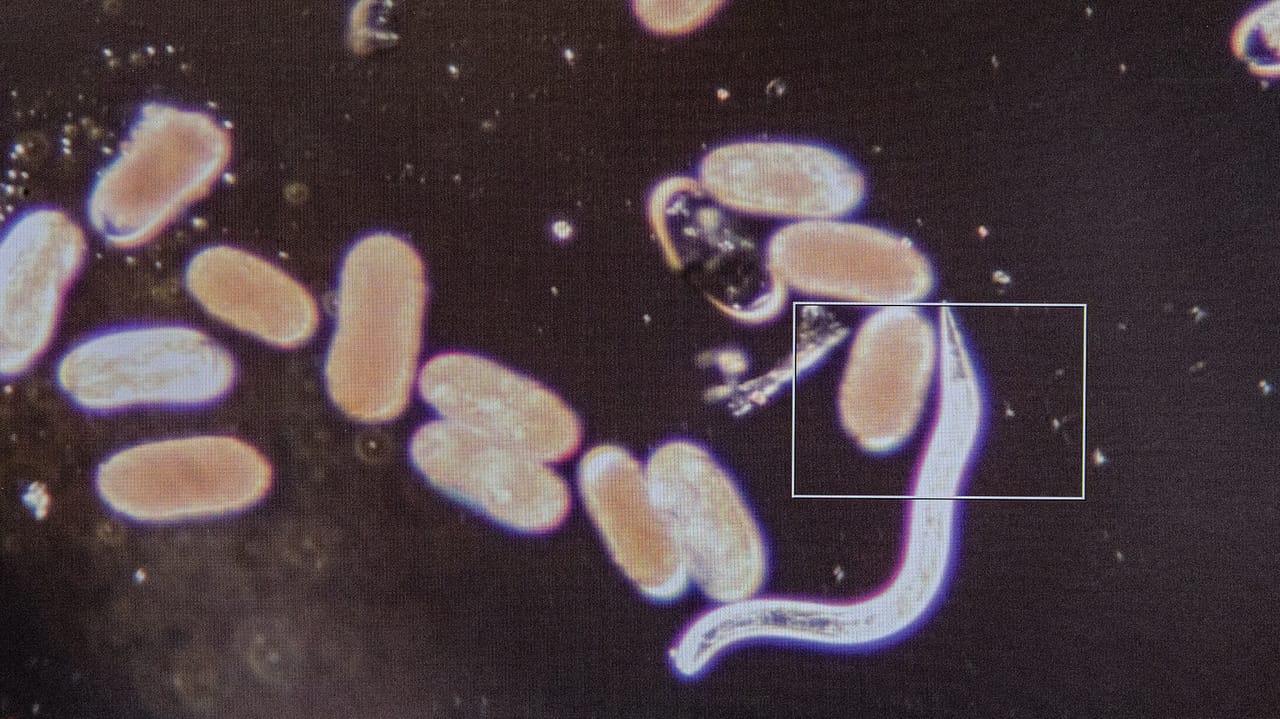
“Thirty years ago, evaluating potential products meant walking fields and taking notes,” Podlich said. “Now, molecular breeding and marker-assisted selection allow us to make many of those choices before we even plant. We’ve gone from working with single genes impacting simple traits to whole genome prediction and genomic selection for complex, quantitative traits. That’s completely changed how we evaluate and improve products.”
Traits and gene editing
The introduction of transgenic traits marked a turning point in modern breeding.
“European corn borer was a huge pest that corn plants didn’t have natural resistance to,” Smalley explained. “When GMO traits came in, they solved that problem and freed us to focus on improving yield and disease tolerance.”
Traits for insect resistance and herbicide tolerance simplified farm management while protecting yield potential. In the process, they made breeding more complex but also more powerful.
“Even though it made farming simpler, it made the breeding process more complex,” Smalley said. “But we’re happy to hold that complexity if it means better outcomes for growers.”
With each generation, breeders have balanced protection and performance, ensuring crops are not only productive but also resilient against pests, stress and unpredictable weather.
If GMOs revolutionized breeding, gene editing is refining it. The difference is in precision and speed. Smalley said GMOs are heavily regulated to ensure safety, but it also makes development lengthy — often 10 to 20 years — and expensive.
Gene editing, on the other hand, can be faster and is more precise while still ensuring safety. It enables precise changes within a plant’s own genome, without introducing foreign DNA, and allows breeders to more efficiently target traits such as disease resistance, maturity and yield.
While the technology is ready, regulatory framework worldwide isn’t yet aligned.
“We’re working to help people understand that gene editing is an advanced breeding technique and is not transgenic,” Podlich said.
For growers, the benefits are tangible. Yield, convenience and lower risk are what have mattered most. Traits like insect and herbicide tolerance simplify management and stabilize yield year to year.
“It’s like compounding interest,” Smalley said. “Every small gain adds up over time. Yield continues to climb, and stability gives farmers confidence to plan ahead. Farming is inherently risky, but technology helps reduce that risk.”
Progress pays off
Over his 55 years of farming in Johnson County in east-central Iowa, Dale Rhodes has seen firsthand how genetics and traits have reshaped the way he farms. Modern corn hybrids have pushed his yields from about 100 bushels per acre decades ago to consistently over 200 today.
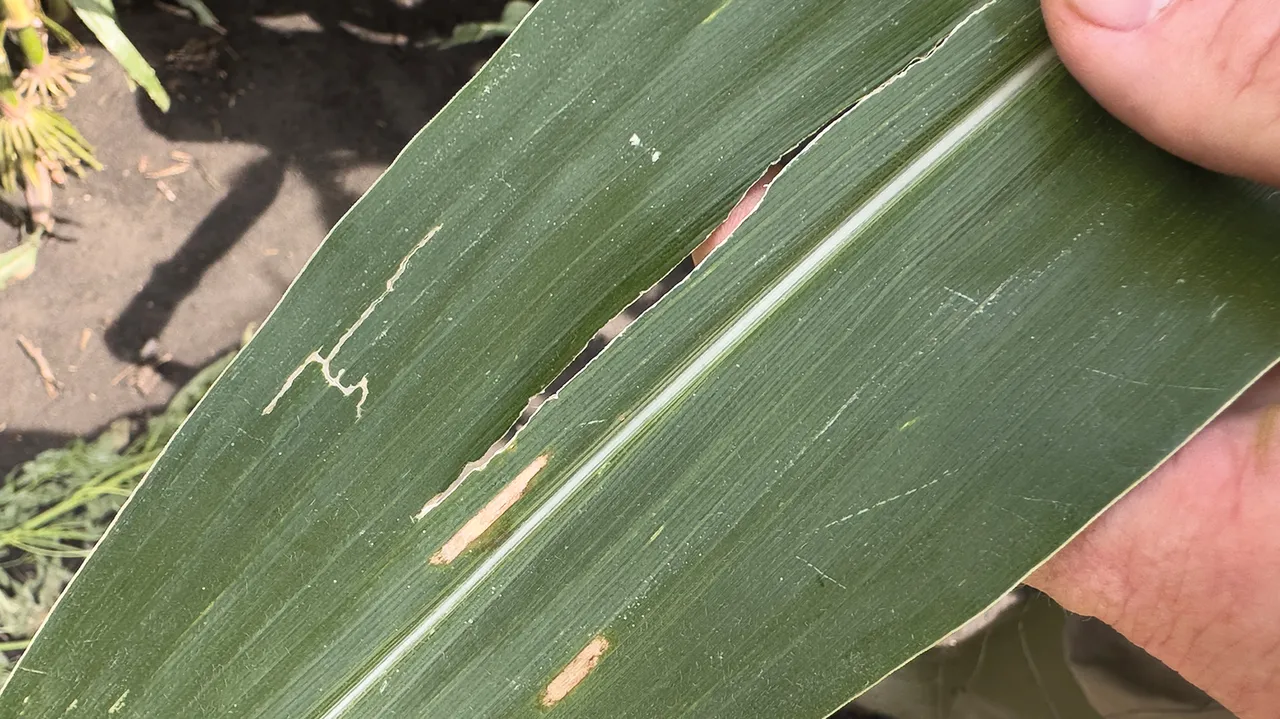
“In the early ’80s, my yield was cut in half in one field due to gray leaf spot before we really understood and started watching for crop diseases,” Rhodes recalled. “That experience changed how I farm. Ever since, I’ve paid close attention to the hybrids I plant and choose ones with stronger disease resistance.”
Rhodes, who farms about 10 miles south of Iowa City, also closely monitors weather cycles, so he’s aware that the U.S. is currently experiencing a dry cycle. Consequently, drought tolerance has become a crucial factor when selecting seed.
“The improvements in hybrids have made my farm more resilient and productive,” Rhodes said. “With input costs climbing every year, the only way to stay ahead is to produce more, and the genetics in today’s seed make that possible.”
Traits for corn borer and rootworm resistance have eliminated the need to handle insecticide boxes, reducing labor and chemical exposure. Drought-tolerant and stress-resistant hybrids have stabilized yields, even in challenging years.
In soybeans, improved emergence and stress tolerance have boosted performance on Rhodes’ tougher soils.
Today, he typically selects eight corn and three soybean hybrids not just for yield but also for their defensive traits, using data and expert insight to guide each decision. The result is higher, more consistent yields and a more efficient, less-risky operation.
The economics of innovation
Innovation brings responsibility to not just the science but also the system it supports.
“We want to make sure pests don’t evolve too quickly, so we focus on next-generation modes of action and integrated pest management,” Smalley said.
Tools like refuge-in-a-bag simplify compliance and slow the development of pest resistance.
“Mother Nature is great at responding to whatever we put out there, and she always finds a way to adapt. It’s also why we need new innovations, so we can try to stay one step ahead of her,” Podlich said.
Modern seed is more than a bag of genetics; it’s a bundle of technology, data and intellectual property. Corteva releases 400 to 500 new products every year. Each one carries innovation that helps drive yield and reduces risk.
“Seed products are built on decades of research and are focused on providing value to farmers,” Podlich said.
While that innovation has value, it also comes at a cost. For most of his career, Rhodes didn’t think twice about seed price; performance ruled his decision. But that changed when one hybrid he was considering recently reached a new high.
Still, Rhodes refuses to base his decision on price alone.
“I won’t buy it just because it’s cheaper,” he said. “It’s not worth it. I’ve been planting Pioneer for years. It’s not the cheapest, but it performs, and that’s what matters.”
Genetics and artificial intelligence
Genetics, the cornerstone of modern breeding, relies on data as its nervous system. Data has always been instrumental in plant breeding, but AI is taking it to new heights, enabling breeders to simulate outcomes before they ever touch the soil.
“We use AI to design traits, analyze field data with computer vision and optimize everything from breeding to seed production,” Podlich said. “Data science runs through every part of the research and development process.”
Iowa State University breeders are using AI to tackle one of soybean’s most persistent pests: soybean cyst nematodes. Traditionally, screening for infection required digging up plants, extracting roots and manually counting nodules.
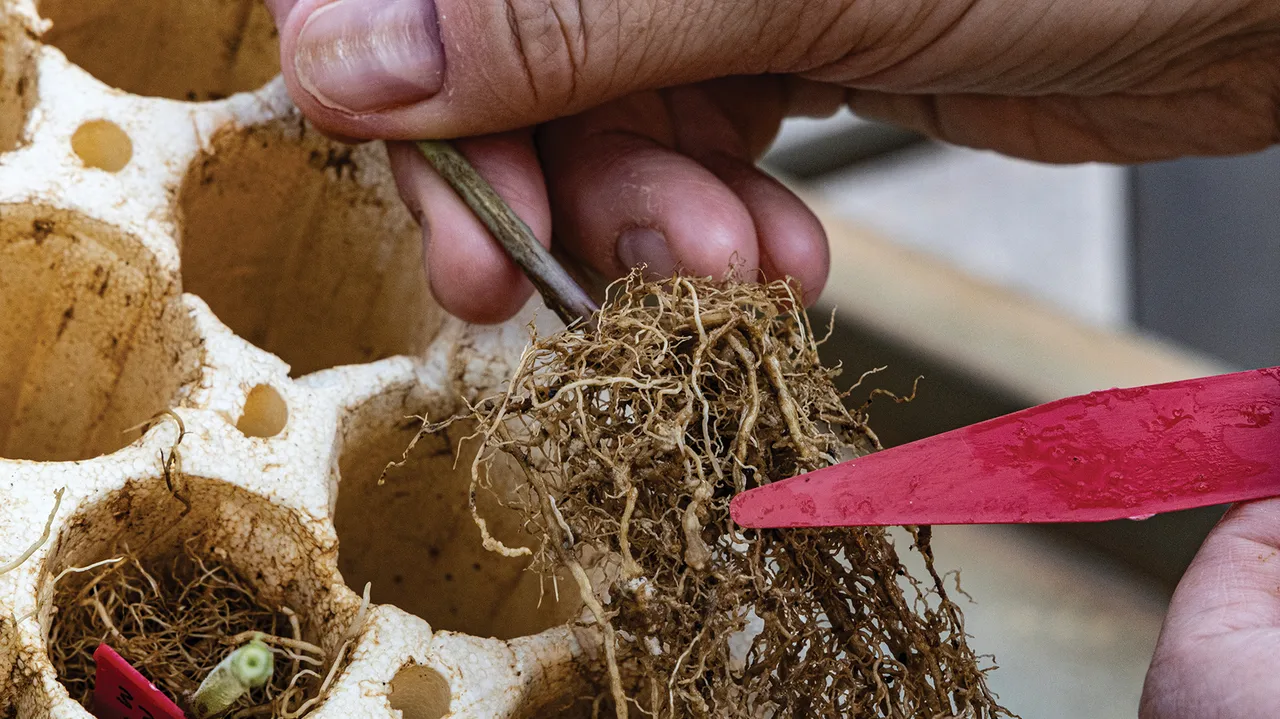
Because AI is useful in collecting complex data, the team developed algorithms that can accurately count nodules from root images. The process has drastically reduced labor and accelerated data collection.
Kendall Lamkey, ISU associate dean at the ag college, said he believes AI will play a pivotal role in automating mundane tasks that once limited research.
“Plant breeding relies on massive amounts of data, and the more data we can collect, the more traits we can select for,” Lamkey said. “But our inability to measure traits at the required scale limits our ability to select for many desirable traits.”
Today’s breeding programs can process petabytes of information from sensors, satellites and field trials, identifying subtle patterns no human could see. For farmers, that means smarter hybrids, faster delivery and varieties better matched to local conditions.
The future is about combining digital intelligence with biological potential. That’s how Smalley and Podlich believe progress will continue — one season, one data point and one seed at a time.
Looking forward
The next decade promises even tighter integration of genetics, data and digital tools. Podlich said he believes farmers will see gene-edited products like multi-disease-resistant or reduced-stature corn, new insect- and herbicide-tolerant genetically modified traits, and even hybrid wheat.
Plus, every seed purchase likely will have a digital component that includes recommendations, analytics and equipment integration.
“The fundamentals of farming haven’t changed. We still put seeds in the ground, but everything around that keeps getting better,” Podlich said. “We’re caretakers of innovation to benefit farmers and society, building on what came before and leaving things better for those who follow.”
Bedord writes from Ankeny, Iowa.