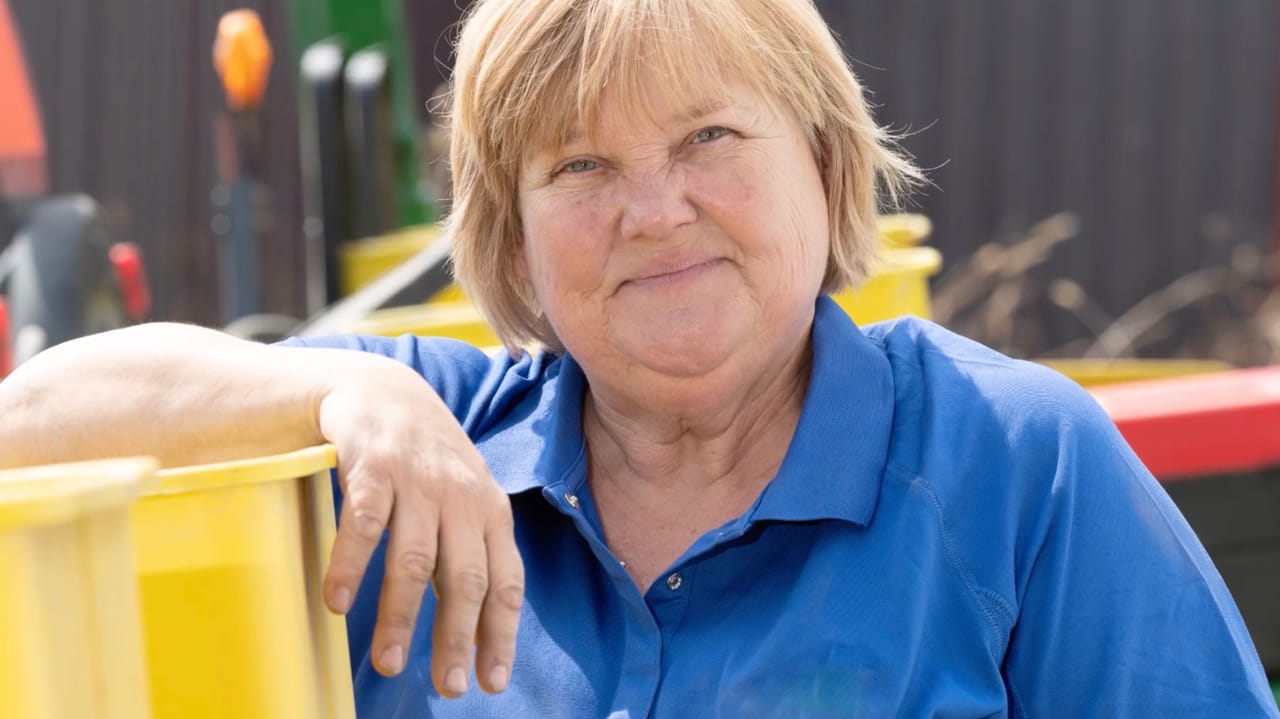
Iowa farmer April Hemmes returned to her family’s row crop farm at 25 during the 1980s farm crisis, when interest rates were twice what they are today. Her grandfather preached practical agribusiness management principles forged through hardship: financial discipline, careful cost evaluation and conservative management of machinery debt.
“He kept the farm going through the Great Depression,” Hemmes said. That hardship-honed advice rings true today. “Younger farmers who have not been through this before may not know how to tighten their belts.”
Can a less-expensive machine still do a decent job? Could trading free up necessary capital? Hemmes said she doesn’t “chase dirt”; she replaces equipment when repair costs surpass that of a new payment; and she budgets for black swan events such as a recent $20,000 combine repair.
At 66, Hemmes is self-described as a “dumpster diver when it comes to technology,” purchasing used precision equipment such as displays and having them rebuilt. She bought an old John Deere box planter several years ago, stripped it down and installed brand-new precision technology.
“I can deal with a box planter. I’ve always had one,” Hemmes said.
Her conservative approach to fleet management considers fixed assets within the entire farm budget, not individually, spending when farm income rises and “clamping down” when it declines.
“Most of my equipment is paid for. I like it that way. I only buy what I need, not what I want,” she said.
Practical agribusiness management
As equipment costs rise, some farmers could take a page from Hemmes’ practical playbook for farm finances. Farmdoc Daily researchers noted high equipment prices lingering above pre-pandemic levels. Machinery industry data reflects this. The Association of Equipment Manufacturers documented fewer tractor and combine sales in March. Tractor sales decreased by 9% year over year, while combine transactions dropped 25%.
“These numbers reflect the overall softness in the ag economy,” said Curt Blades, senior vice president of industry sectors and product leadership at AEM. “Despite these declines in sales in 2026, the commitment to modernizing equipment and adopting innovative technologies remains strong, positioning the industry for long-term growth.”
Without farmer-buyers, used equipment is increasingly being absorbed into rental fleets, according to Sandhills Global’s latest industry report. Both used tractor and combine inventory is contracting. Auction values show upward trends, though asking prices remain mixed with year-over-year declines. The farm machinery marketplace is generally stabilizing into a new normal.
Manufacturers gear up for future
Farm machinery brands are planning for whatever comes after this downturn. Farmers should, too. Hemmes’ grounded approach to agribusiness looks ahead, considering next year and the one after, not just the current challenge. It also prioritizes communication with lenders during tight margins.
“The earlier you talk to them, the better,” she said, adding that growers can’t control much, which makes what they can control that much more important.
“Figure and figure and figure,” Hemmes said, noting a need to meticulously track “cost of production, cost of equipment per acre, and seed per acre.”
Revenue per acre matters more than total acreage. Is rented land turning enough profit to justify keeping it? Machinery decisions made now will resonate when the farm economy turns again, either up or down.
“Not many people know their cost of production — probably less than 5% of farmers,” Hemmes said, referencing a marketing expert’s estimate. “How can you know where to sell if you don’t know your cost of production?”