As spring temperatures warm, the landscape starts to green up around us. This spring — among the green of typical weeds that include waterhemp, giant ragweed and velvetleaf — you may find a new invader: Asian copperleaf.
This article will address identification, what we know about management and why everyone should scout for this species.
What is Asian copperleaf?
It’s an annual plant that reproduces only by seed. It is native to Asia and closely resembles several other copperleaf species in Iowa, such as Virginia copperleaf and rhombic/rhomboid copperleaf. While most other copperleaf species are rarely found in crop fields, Asian copperleaf has only been found in corn and soybean fields in Iowa.
Copperleaf plants have round cotyledons and ovate-shaped leaves. The first set of leaves on Asian copperleaf appears to have an opposite arrangement, while subsequent leaves are alternating on the stem.
In early stages, Asian copperleaf might easily be overlooked due to its similarities to other annual weeds in crop fields. The round cotyledons might be mistaken for ragweeds, velvetleaf or Venice mallow.
Once the plants produce several leaves, seedlings may look similar to waterhemp. One key difference between Asian copperleaf and waterhemp is that Asian copperleaf will have blunt teeth around the leaf margins, while waterhemp has a smooth leaf margin.
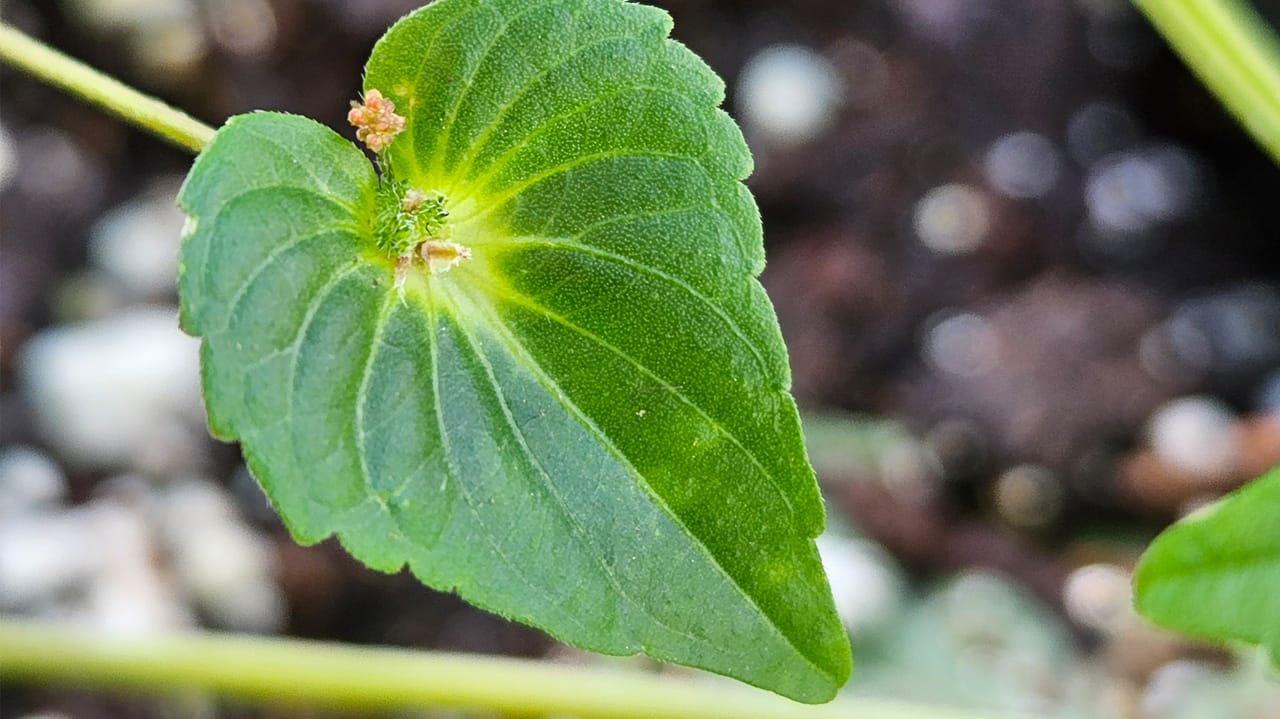
The key to confirming that a plant is Asian copperleaf, and not another copperleaf, is to look at the bracts surrounding the flower structures in late July each summer. Asian copperleaf has egg-shaped or heart-shaped bracts, while the other copperleaf species will have bracts with deep lobes and look more like hands gripping underneath the flowers.
Resistance to some herbicides
We currently have limited information on the best management strategies for this new weed species. Based on observational work in Boone County, Iowa, this species begins germinating in late April or early May and continues to germinate through much of the summer, like waterhemp. Researchers in its native range also have reported resistance to some herbicides.
Farmers managing this species report that it is challenging to manage with herbicides, especially in corn. You should focus on similar principles to managing waterhemp, including:
- applying multiple herbicide groups at effective rates
- using layered residual herbicides
- making timely postemergence applications to small plants
- producing a competitive crop canopy to reduce late-season emergence
An informal screen of postemergence herbicides showed only one product that provided 100% control of 3-inch-tall Asian copperleaf. This emphasizes the importance of a multipronged approach to control it.
In future years, we hope to more thoroughly research preemergence and postemergence herbicide efficacy against this species.
Why scouting is important
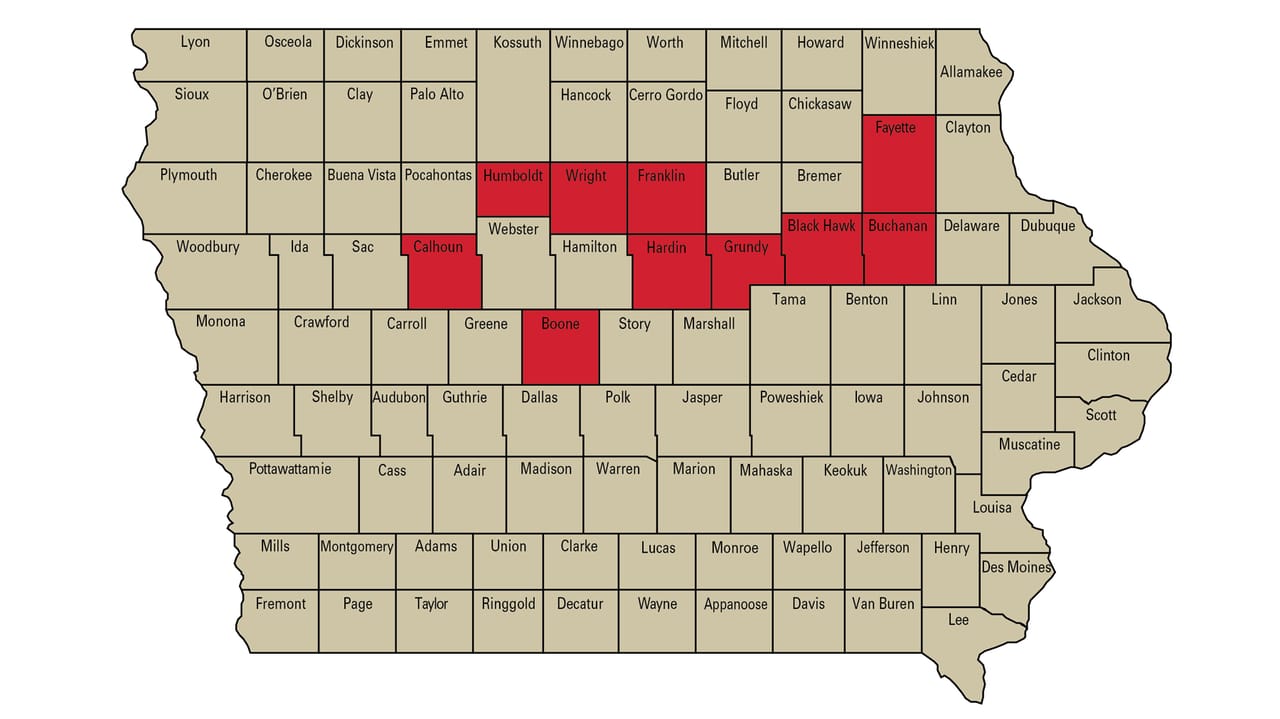
So far, we’ve identified this species in 10 counties across north-central Iowa, spanning from Calhoun County in the west to Buchanan and Fayette County in the east. Additionally, it was found in Illinois in late 2025.
The ideal solution to a new weed species that we don’t know much about is to eradicate it. While we don’t know a lot about this species, it has several characteristics that raise substantial concern:
- a history of herbicide resistance
- a lengthy emergence pattern
- prevalence in Iowa corn and soybean fields
- known survival against herbicides used in Iowa crops
Early identification is necessary to allow eradication to be possible in crop fields. Keep an eye out for this species this growing season, and please alert your local Iowa State University Extension and Outreach field agronomist if you find it.